
Summer Safety for Autistic Children
The arrival of summer means more time outdoors enjoying the warm weather and longer days. Ensuring the safety of autistic children requires extra attention because of difficulty with communication, social interaction, and sensory needs which can increase the risk of accidents or unsafe situations.
While the neighborhood, parks, and local community spaces may be well known, there are still things to be aware of to keep a person safe such as roads, parking lots, traffic, bodies of water, the potential for wandering, and the increased likelihood of encountering strangers.
There are two important points to remember when thinking about safety:
- Having strategies to maintain safety.
- Having a plan for if/when an event happens that jeopardizes a person’s safety.
When thinking and planning for safety, parent Shirley Anderson says to keep these four things in mind:
- Predictability – Being able predict a possible unsafe situation.
- Proactivity – Safeguards that can be utilized in advance to avoid an unsafe situation.
- Prevention – Steps taken in an unsafe situation. For instance, can the individual be taught safety concerns? Or does the family or caregiver need to always be aware of the individual’s actions?
- Preparedness – A step-by-step safety plan of execution is ready in the event of an unsafe event.
Create a safety plan which is a personalized, practical plan to seek safety for an individual. This plan should include key/critical information that is specific to a range of possible situations. A good safety plan will help you prepare for and respond to various situations. Share this plan with friends, family, caregivers and anyone else who will be supporting the autistic child.
A safety plan can be revised as you gain more experience in different situations and learn what does and doesn’t work. It can be hard to think clearly in moments of crisis which is why it’s important to have a plan in place in order to stay focused when feeling overwhelmed in a stressful situation.
Essential safety skills are important in all aspects of daily life. These include teaching a child to respond to their name, understanding and responding to simple instructions such as “stop,” “wait” and “come here,” and practicing walking with you and holding hands frequently. Even though my children are now adults, we taught them these things when they were young and still use them today depending on where we are and what the situation is.
Some safety skills can be taught while engaging in certain activities such as going on a walk, playing at a park, or being in the water. Let’s explore some general safety tips to help keep an autistic child safe this summer.
Road Safety
- Model safe pedestrian behavior such as walking on sidewalks, only crossing at crosswalks, pressing the crossing signal button, and looking in all directions before crossing.
- Incorporate the use of visual aids, such as a checklist with the steps to crossing the street or rules for walking down the sidewalk to increase understanding.
- Work on judging space and distance. For example, ‘Is the car coming fast or slow?’ or ‘Will we have enough space to pass the people on the footpath?’
- Use social stories as they provide information about the skill being taught. Pair the story with practice and role play and review the story before going out for a walk.
- Practice, practice, practice. Review videos, read stories, play games (e.g., using toy cars and a car mat, safety sign match or online games) and role play in the safety of your own home, then go outside with your visual checklist and practice.
- In parking lots, teach a child to wait for you before stepping away from the car. Many people don’t look properly when backing up or drive too fast in parking lots.
- Consider applying for an accessible placard if you need additional support in parking lots.
Water Safety
Teach a child how to swim or at the very least, how to be safe around water. Autistic children are 160 times as likely to die from drowning than the general pediatric population.
- Teach a child to ask for permission to enter/access water. This could include asking if they can get in the pool, play at a water table, or kick their feet in the lake.
- Incorporate the use of visuals to create boundaries around water such as a timer to countdown entering the water, a visual schedule that shows when you will be swimming, or a stop sign on the pool gate.
- If a child is drawn to water, provide supervised opportunities throughout the day for them to play in water. Include water play in the daily schedule to let them know when they will have access.
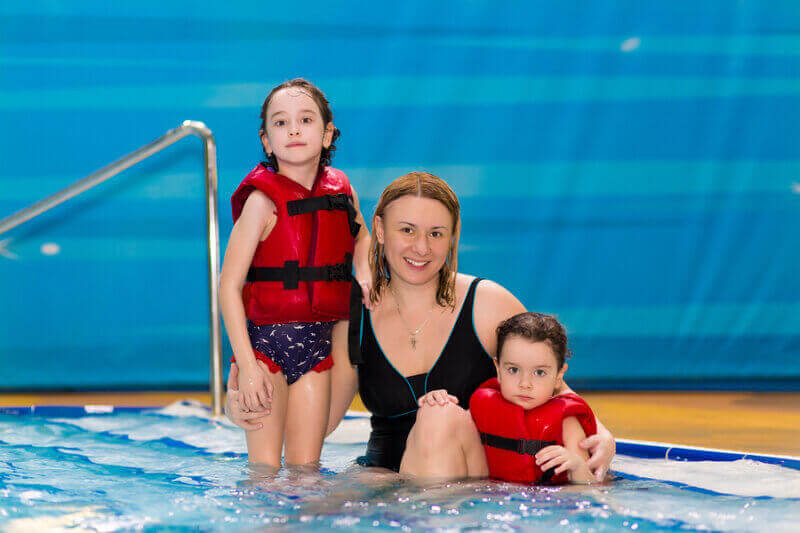
- Teach a child to tolerate wearing a puddle jumper or lifejacket.
- Always supervise a child when they are in or near the water.
Wandering/Elopement
Elopement refers to the act of leaving a designated area without permission, supervision, or the knowledge of those responsible for the individual. In the context of autism, elopement involves autistic individuals wandering away, running or bolting from safe and supervised environments, putting their safety at risk.
One third of autistic children who wander/elope are never or rarely able to communicate their name, address, or phone number. Other dangers may include dehydration, heat stroke, hypothermia, falls, physical restraint, or encounters with strangers.
Record Elopement Incidents
We can learn from elopement incidents. Keep careful records of every elopement attempt — successful and unsuccessful. Include the following information:
- Where the child was when the incident began.
- Where they were found and where you think they were headed (if those are different places).
- Who they were with before they eloped and who found them.
- The time, date and anything significant about the day.
- What you think triggered their wandering.
- What happened after they were found.
- Knowing what events, feelings, needs or stimuli provoked an incident can help better predict (and prevent) future elopements.
If an elopement happens:
- Search the immediate area: Look in nearby places where the person may have gone, such as a park or store.
- Call for help: Contact law enforcement and other agencies in your area to report the elopement and get assistance with the search. Have a recent photo of the person available.
- Notify friends and family: Let others know that your child is missing and ask for their help in finding them.
Making Outdoor Spaces Safe
Backyards can provide lots of opportunities for exploration, sensory play, gross and fine motor skill practice, and a chance to build social skills through unstructured play. Being outside reduces anger, fear and stress, and contributes to physical well-being by reducing blood pressure, heart rate, muscle tension, and the production of stress hormones such as cortisol. Outdoor activity can also support a better sleep at night.
Before using any outdoor space, make sure it is safe. The area should be enclosed with a fence if the child is prone to running away or having a flight response if there is a trigger like a loud noise. If in an open, natural space, stay clear of bike paths and be extra vigilant with supervision around water.
In the backyard, remove all garden tools and store them when not in use. Having a pop up tent or little playhouse can provide a quiet space for calming if a child becomes overstimulated and needs a break while outside.
By taking proactive measures such as teaching safety skills and closely monitoring an autistic child’s environment, you can help prevent accidents and ensure a safer life. Tailoring safety strategies to a child’s unique needs will empower them to navigate the world more safely and confidently.
Resources
National Autism Association – Water Safety
National Autism Safety Council
References
Anderson, S. Ensuring Safety: A Parent’s Perspective. Aide Canada
(July 20, 2022). Safety skills to help keep your child with autism safe this summer. Kinark Autism Services
(November 20, 2019). Child Safety Outside of the Home. Organization for Autism Research
Ten Safety Considerations for Children with Autism Mississauga. Monarch House
Editorial Policy: Autism Awareness Centre believes that education is the key to success in assisting individuals who have autism and related disorders. Autism Awareness Centre’s mission is to ensure our extensive autism resource selection features the newest titles available in North America. Note that the information contained on this web site should not be used as a substitute for medical care and advice.