

Screen Time and the Health and Well-Being of Autistic Individuals
Screen time is a part of everyday life. For autistic individuals, devices can provide great opportunities for connection, learning, exploring interests or deep dives into passions, and communication without pressure. Screens can help with regulation by offering a sense of safety and predictability in an overwhelming and unpredictable world. Technology can support executive functioning with online calendars and planners or being able to set multiple alarms and reminders. Accessibility can be increased through technologies such as speech-to-text, text-to-speech, and augmentative and alternative communication devices (AACs) that provide accommodations for individuals who may have trouble with reading, writing, or verbal communication.
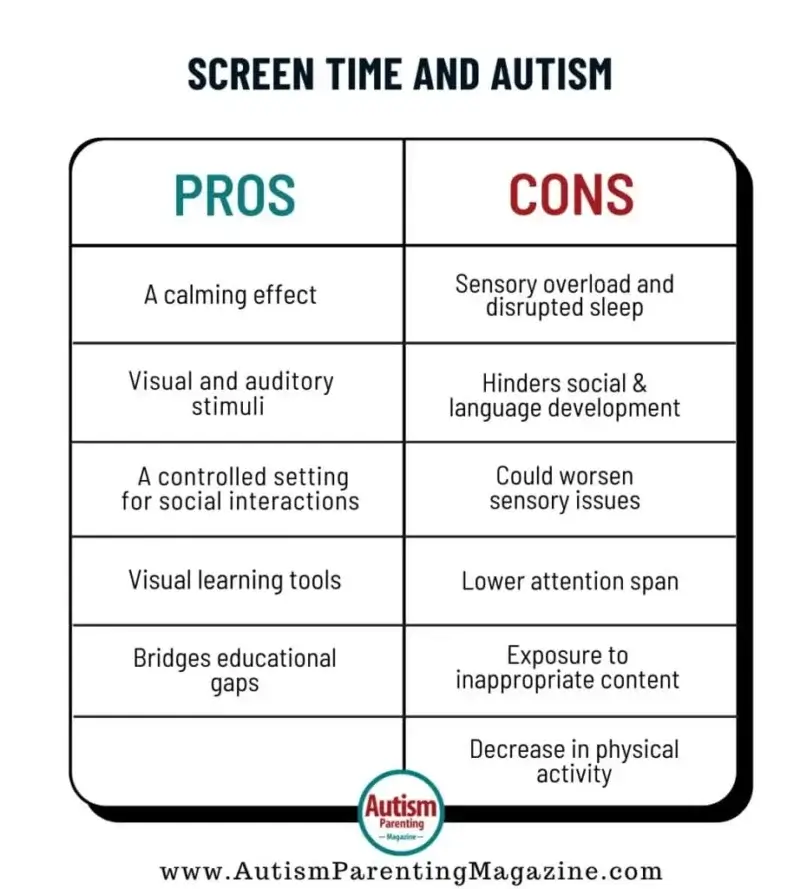
Excessive screen time also has some drawbacks such as:
- overstimulation – especially for people who are hypersensitive to visual or auditory input
- sleep disturbances
- addiction to screens
- sensory overload – bright screens, rapid movements, and constant notifications can overwhelm the sensory system
- reduced attention span
- make transitioning to other activities more difficult
- emotional dysregulation
- increased online safety concerns
- decreased physical activity
How can we find a balance and manage screen time?
Screen time rules will work best when they are simple, visual, and consistent. Clear routines and expectations will help create predictability around screen use. Current guidelines suggest avoiding screens during meals, not using screens as a pacifier, and turning devices off at least an hour before bed.
Here are a few ideas from Encore Support Services on developing guidelines around screen use for children:
- Create a visual rules chart. Show when devices are allowed and when they are put away, using pictures or icons.
- Use first/then language. Say “First homework, then tablet” and show this sequence on a simple board.
- Set timers for sessions. Use visual timers or countdown apps so the child can see screen time ending.
- Keep the rules the same for everyone. Make “no phones at dinner” a family rule, not only a rule for the autistic child. Lead by example.
- Pair limits with choices. Let a child choose which show, game, or activity takes place during your set times.
After school, have planned device time as a decompression break, followed by movement and sensory activities like outdoor play or hands-on projects.
In the evening, view calmer content and turn screens off at least one hour before bedtime. Try to create screen-free wind-down routines such as reading, bath time, or quiet play.
The National Health Service Leicestershire Partnership suggests autistic people try to break up long sessions of screen time by taking part in outdoor activities, walks, non-screen related games, and crafts – and avoid having meals in front of screens; however, there may be exceptions to this rule if a person has difficulties with eating and drinking, causing health difficulties which can be reduced when eating in front of a screen. There may be some instances where using a screen at a table might help an autistic person feel more comfortable in a social situation – for example in a busy restaurant or when they are in a group of people they do not know well. For example, our daughter needs her iPad with headphones on to reduce noise and external stimulation in restaurants.
The following infographic comes from Achievement Behavior Services:
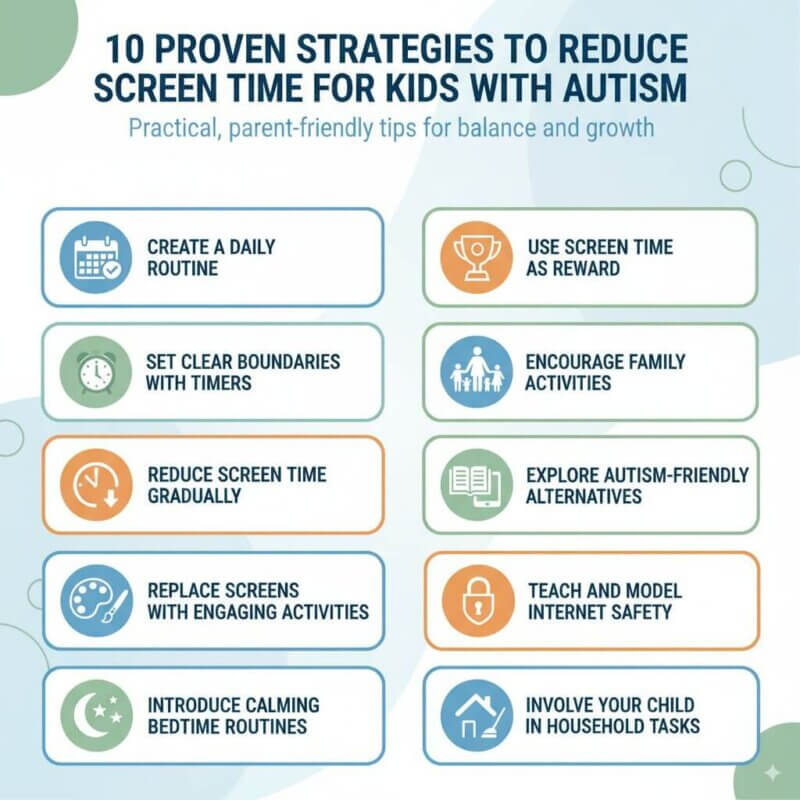
Creating a Safe Environment – Tips for Parents, Caregivers, Educators and Support Personnel
We can build support for internet safety and well-being by:
Being Confident – if the child is under 18 or you are their legal guardian if over the age of 18, you need to look at content and check devices.
Being Curious – communicate and set boundaries and rules for use – these are a part of safety. Do detective work and see what sites they are visiting or interested in. My daughter is an avid writer and communicator on WattPad but sometimes the communication thread takes a wrong turn or the posts become too heated and upsetting. She regularly takes breaks from WattPad that can last several days until she feels ready to come back.
Being Cautious – know what the potential internet risks are. You can learn about the risks on sites like Connect Safely or Internet Matters.
Being Prepared – agree what the child or adult can and can’t do online. Set out clear rules, boundaries and limits in writing, with visuals, or by using individualized tools. If something goes wrong on the internet, there is help available through sites like Need Help Now and Cybertip!
For many autistic individuals, digital devices can be an essential tool for navigating everyday life and enhancing health and wellbeing. There are also risks connected with spending time on devices. These include potential negative effects on mental and physical health such as risks to safety and contributing to sleep disturbances and mood difficulties.
Every autistic person will have their own unique strengths, likes, dislikes and vulnerabilities. Prioritize investigating and weighing all the potential risks and benefits for every person. Think about how screen time might affect their health and wellbeing, either positively or negatively – and take steps to try and ensure that screen time is a positive experience and as safe as possible.
References
Encore Support Staff. How Can Parents Build Healthy Screen Time Autism Routines at Home? Encore Support Services
Kiezer, K. (July 9, 2025). Autism and Screen Time: A Must-Know Connection for Parents. Autism Parenting Magazine
Lindenblatt, A. (September 22, 2025). How to Reduce Screen Time for Kids with Autism: A Parent’s Guide. Achievement Behavior Services
Martinelli, K. (January 22, 2026). Neurodivergent Kids and Screen Time. Child Mind Institute
Using technology safely when you’re autistic. NHS Leicestershire Partnership
Editorial Policy: Autism Awareness Centre believes that education is the key to success in assisting individuals who have autism and related disorders. Autism Awareness Centre’s mission is to ensure our extensive autism resource selection features the newest titles available in North America. Note that the information contained on this web site should not be used as a substitute for medical care and advice.